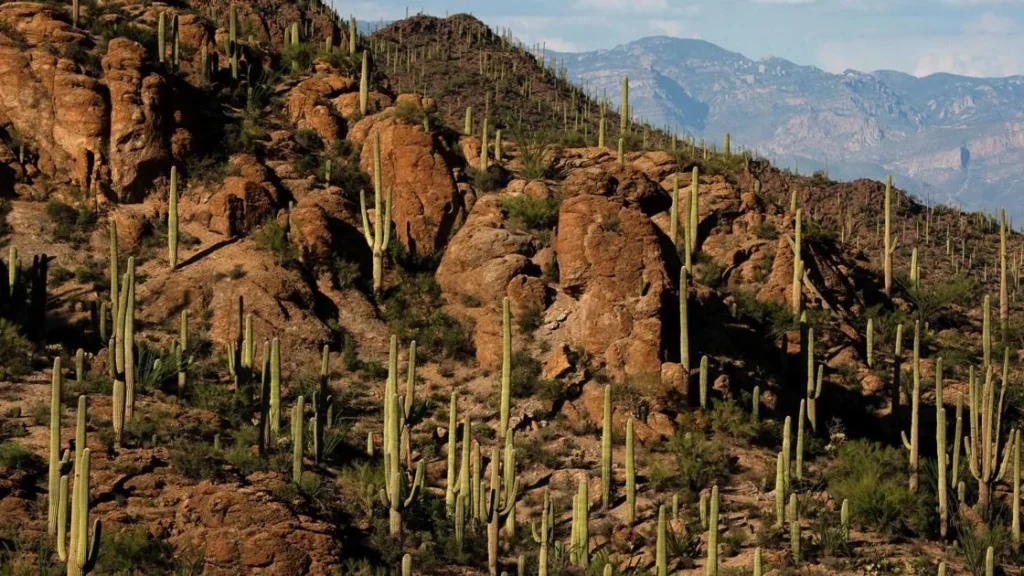


PHOENIX, AZ — Prolonged heat waves are taking a growing toll on Arizona’s saguaros, especially around Phoenix, where researchers say extreme daytime heat and unusually warm nights are combining to weaken the desert icons. The heat can interfere with the cactus’s ability to make food and also dry out the water stored in its trunk and arms.
The concern is not a single hot spell, but repeated stretches of severe heat. Botanists say the damage can build over time, leaving saguaros more vulnerable to sunscald, collapse and infection during the hottest parts of the year.
The setup
Researchers at the Desert Botanical Garden in Phoenix say saguaro mortality caused by heat climbed sharply in recent years. Before 2020, about 1% to 2% of the cacti died each year from all causes, but the heat-related rate rose to 4% in 2021 and 7% in 2023.
That summer, Phoenix logged 31 straight days with temperatures of at least 110 degrees. Research director Kevin Hultine said the heat-related death rate has since eased, but only to about 4% to 5%, which still leaves him worried about the cactus’s future in a hotter climate.
The saguaro is built for desert survival. It can grow 40 feet tall or more, live for many decades and store large amounts of water. Even so, researchers say the plant is being pushed by heat that has become longer lasting and more intense than the conditions it evolved to handle.
Timing and areas
The biggest stress comes during long hot stretches, when daytime temperatures rise and nights fail to cool down enough for the cactus to recover. Researchers say nocturnal heat is especially important because saguaros rely on cooler nighttime conditions to complete part of their photosynthesis.
In Phoenix, the number of nights staying above 86 degrees has surged this decade. Researchers say the region has already seen more than 175 such nights, compared with just nine during the entire 1960s.
At Phoenix Sky Harbor Airport, officials recorded 115 nights over that 86-degree threshold in 2023 and 2024 combined. Tucson has faced fewer of those extreme nights and remains at a cooler elevation, which researchers say has helped saguaros there do better.
What to expect
Hot nights can disrupt the cactus’s nighttime chemistry, reducing how much carbon dioxide it stores for food production. Researchers say that once temperatures approach 86 degrees, that process can begin to break down, and the hotter the night gets, the less efficiently the plant can function.
Daytime heat adds another layer of stress. When air temperatures reach 113 degrees, Hultine said the cactus surface can climb to 131 to 140 degrees, which can damage tissues, trigger sunscald and leave openings for bacteria and fungi. Severe water loss can also cause saguaros to sag or topple.
The effects are slow, but they are serious. Schuessler said it can take a decade for some saguaros to die after repeated heat stress. The bigger concern for researchers is reproduction, because young saguaros are already rare and need favorable rainfall and cooler conditions to survive long enough to replace older plants.
How to stay ready
- Travel: Plan for extra heat on roads, trails and desert outings during hot spells, especially in the afternoon.
- Water: Carry more drinking water than you think you will need and avoid waiting until you feel thirsty.
- Pets: Keep pets off hot surfaces and limit time outdoors when temperatures remain high day and night.
- Plants: Give landscape plants and cacti appropriate care, and watch for sunscald or collapse after extreme heat.
- Alerts: Follow National Weather Service heat guidance and local weather updates during extended hot stretches.
The bottom line
Researchers say Arizona’s saguaros can survive short bursts of extreme heat, but repeated hot days and warm nights are wearing them down over time. The concern is not just immediate damage, but whether the cactus can keep reproducing under today’s hotter desert conditions.
Long-range forecasts discussed by researchers point to an unusually hot spring and summer ahead in the Phoenix area, which could dry out soils even more. Botanists say the next major test for the state’s iconic cactus will come as the region moves deeper into another hot season.
Always follow official National Weather Service alerts and local emergency guidance.