
WASHINGTON, DC — A pair of storm systems is disrupting Thanksgiving across much of the country, bringing heavy rain, strong winds, coastal flooding and snow to several regions. The weather is also causing widespread power outages, flight cancellations and delays, and road trouble in some of the hardest-hit areas.
The storm impacts are expected to continue through the holiday and into Friday in some places, with the most serious effects centered on the East Coast, parts of the Midwest and stretches of the West Coast.
The setup
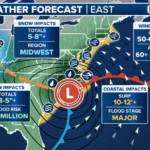
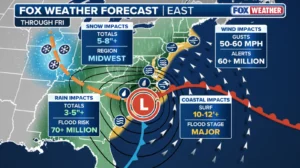
The National Weather Service and local meteorologists said the weather pattern is producing very different hazards depending on location. Along the East Coast, the main concerns are strong winds, heavy rain and coastal flooding. Farther west, king tides are combining with high surf to push water higher than normal along beaches and bays.
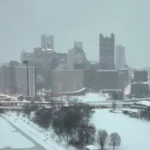
In the middle of the country, a winter storm is dumping heavy snow across parts of Missouri and Illinois. The National Weather Service said winter storm warnings and watches were posted in parts of those states, with significant accumulation expected around St. Louis.
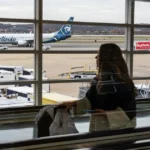
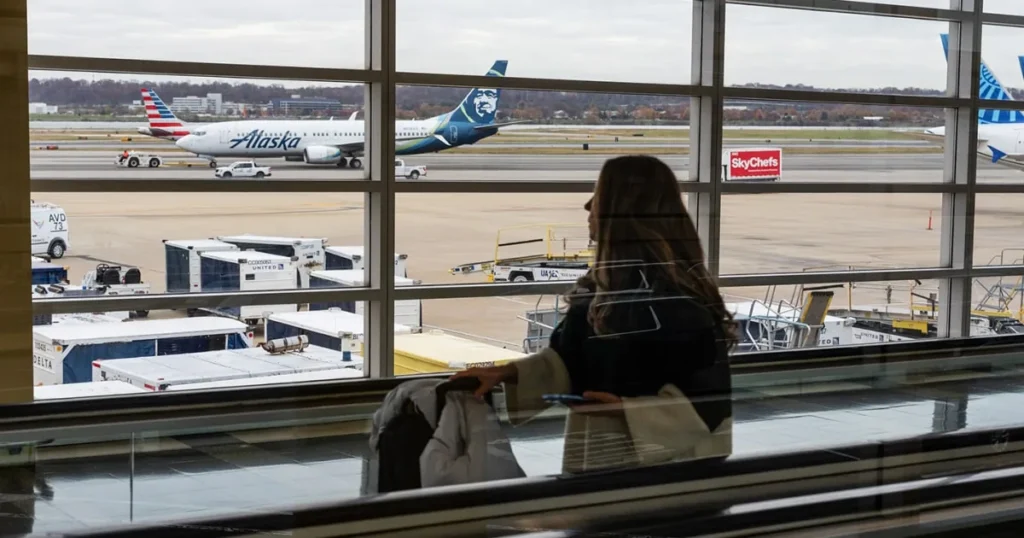
Officials also warned that the storm could affect air travel by reducing visibility, increasing turbulence and creating difficult conditions at major airports. That has added to an already busy holiday travel period.
Timing and areas
The rough weather is affecting both coasts and the central U.S. at the same time. In New York, the National Weather Service said rain would continue to spread across the area and intensify through the afternoon, with winds strengthening later in the day.
Along the Eastern Seaboard, major impacts were reported from the Mid-Atlantic into New England, with flooding, outages and travel disruptions in places including Washington, D.C., Maryland, Virginia, Pennsylvania, New Jersey and New York. On the West Coast, coastal flood warnings stretched from Southern California to the San Francisco area and north to Oregon and Washington.
What to expect
Wind has been one of the biggest problems in the East. The National Weather Service said Central Park gusted to 48 mph around 12:20 p.m. ET, and peak winds in New York were expected between about 3 p.m. and 9 p.m., with gusts possibly reaching 60 to 65 mph near the coast.
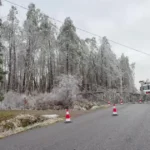
Those winds have already brought down trees and power lines in several communities. In Arlington, Virginia, a falling tree struck a car on George Washington Memorial Parkway, trapping one person before firefighters freed the occupant. In Silver Spring, Maryland, a tree hit a home and damaged a gas line, though two older residents were rescued unharmed.
PowerOutage.us showed more than 850,000 customers without electricity nationwide late Thursday, with the heaviest outages in Pennsylvania, New Jersey, Maryland, Virginia, Missouri and New York. FlightAware also showed more than 400 canceled flights and more than 2,000 delays, with East Coast airports among the hardest hit.
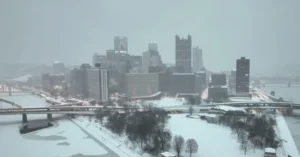
Snow has been especially disruptive in Missouri. St. Louis recorded 7.3 inches, while Ste. Genevieve reached 14 inches. Ameren said restoration in the St. Louis area could take multiple days because heavy, wet snow brought down lines and branches onto electrical equipment.
On the coast, flooding has been severe enough to close major routes. The Chesapeake Bay Bridge-Tunnel and the James River Bridge were shut, and record water levels were reported in parts of the mid-Atlantic. In New York City, Central Park also logged its wettest Thanksgiving on record with 1.82 inches of rain, according to the National Weather Service.
How to stay ready
- Travel: Allow extra time at airports and on highways, and check flight and road conditions before leaving home. Delays and cancellations are likely in the storm’s hardest-hit areas.
- Power: Keep phones charged, have flashlights ready and be prepared for extended outages, especially where wet snow and high winds have damaged lines and trees.
- Flooding: Avoid driving through water-covered roads and stay away from coastal areas where flooding, high surf and strong tides are affecting communities.
- Alerts: Follow National Weather Service warnings, watches and advisories in your area, including wind, coastal flood and winter storm alerts.
- Check on others: Make sure older neighbors, people with medical needs and pets are safe, warm and able to get help if power or travel conditions worsen.
The bottom line
This is a wide-reaching holiday storm system, and its main impacts are clear: dangerous wind, coastal flooding, heavy snow, power outages and travel delays. The worst conditions are centered on the East Coast, Missouri and parts of the West Coast.
Residents should keep watching local forecasts through Friday, since some of the strongest wind and the slowest power recovery are expected to continue after Thanksgiving Day. Weather alerts may change as the storms move and weaken.
Always follow official National Weather Service alerts and local emergency guidance.